
Micro_TP2
TP2 Rapport de Micro
JIN Zhuoyuan 22213816
Ex1
1.1
| Op1 | Op2 | Type d’opération | Résultat | N | Z | C | V |
|---|---|---|---|---|---|---|---|
| 0x08000000 | 0x07000000 | + | 0x0F000000 | 0 | 0 | 0 | 0 |
| - | 0x01000000 | 0 | 0 | 1 | 0 | ||
| 0x40000000 | 0x40000000 | + | 0x80000000 | 1 | 0 | 0 | 1 |
| 0x40000000 | 0x80000000 | - | 0xC0000000 | 1 | 0 | 0 | 1 |
| 0x00F00000 | 0xFFFFFFFF | + | 0x00EFFFFF | 0 | 0 | 1 | 0 |
| 0x7F000000 | 0x0F000000 | + | 0x8E000000 | 1 | 0 | 0 | 1 |
| - | 0x70000000 | 0 | 0 | 1 | 0 | ||
| 0x0F000000 | 0x7F000000 | + | 0x8E000000 | 1 | 0 | 0 | 1 |
| - | 0x90000000 | 1 | 0 | 0 | 0 |
1 | .data |
1.2
1 | .data |
resultat: 0x0F000000 01000004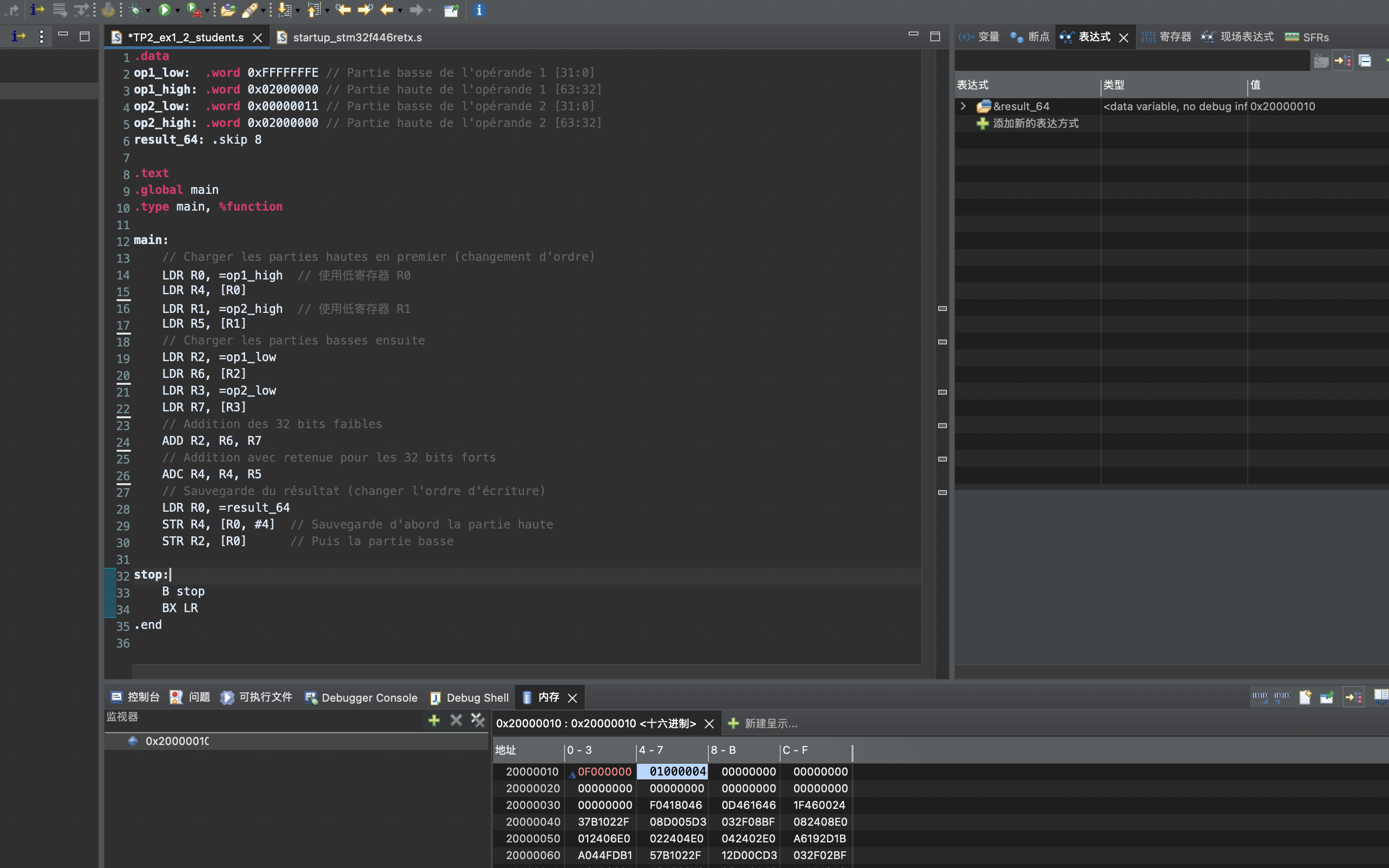
1.3
1 |
|
- AND est utilisé pour conserver certains bits et effacer les autres.
- ORR est utilisé pour définir certains bits.
- BIC est utilisé pour effacer des bits spécifiques.
- LSL (décalage logique à gauche) est utilisé pour accélérer la multiplication (×2ⁿ).
- ASR (décalage arithmétique à droite) est utilisé pour la division des nombres signés.
- LSR (décalage logique à droite) ne préserve pas le bit de signe.
- EOR (ou exclusif) est utilisé pour inverser certains bits.
- BIC (effacement de bits) est utilisé pour masquer certains bits.
Ex2 Suite de Fibonacci
La suite de Fibonacci est une suite d’entiers dont chaque terme est la somme des deux termes précédents. Les deux premiers termes permettent de démarrer le calcul et sont initialisés à 0 et 1 respectivement.
On note donc que :
F(n) = F(n-1) + F(n-2)
2.1
1 |
|
Resultat: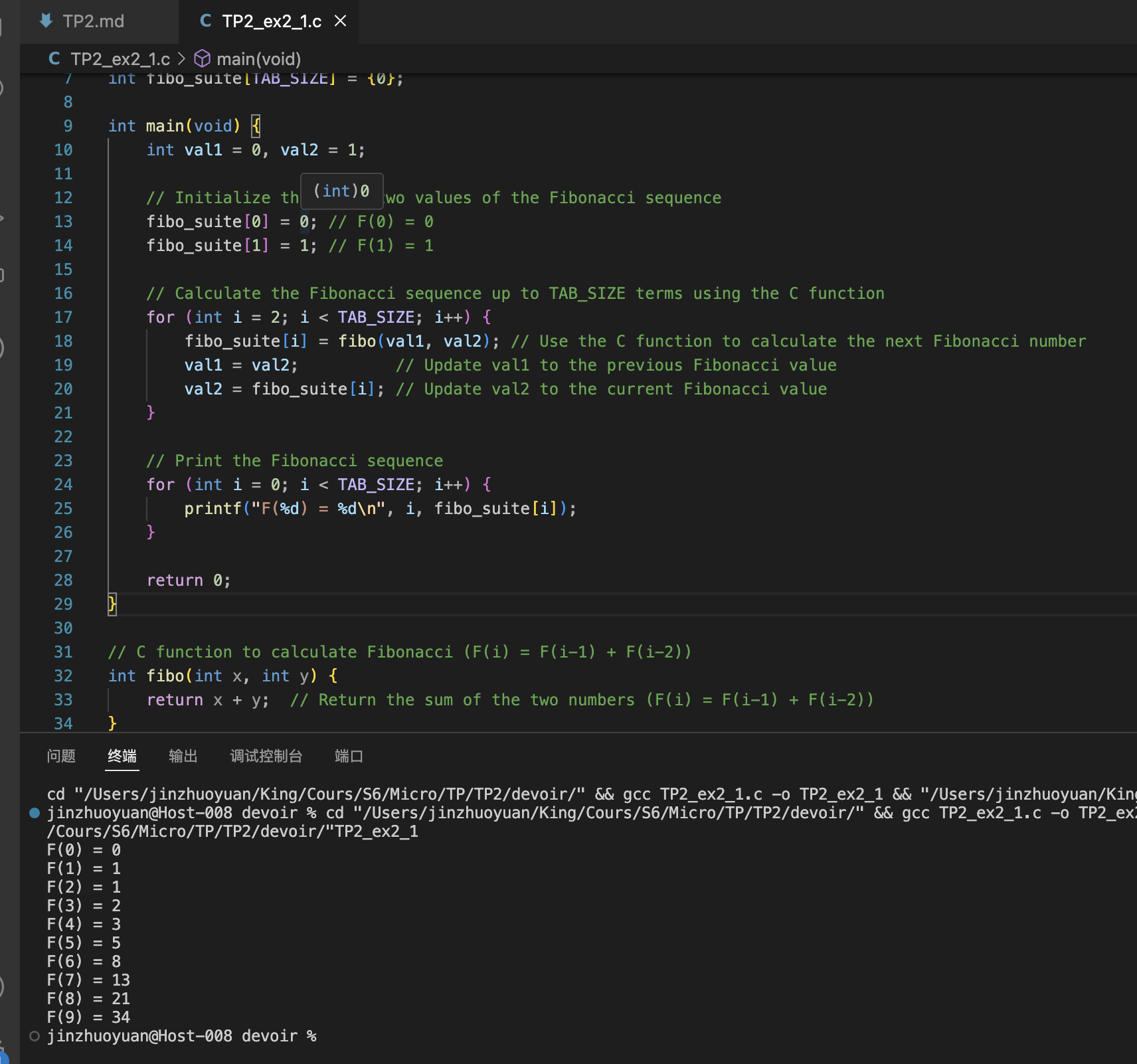
2.2
1 |
|
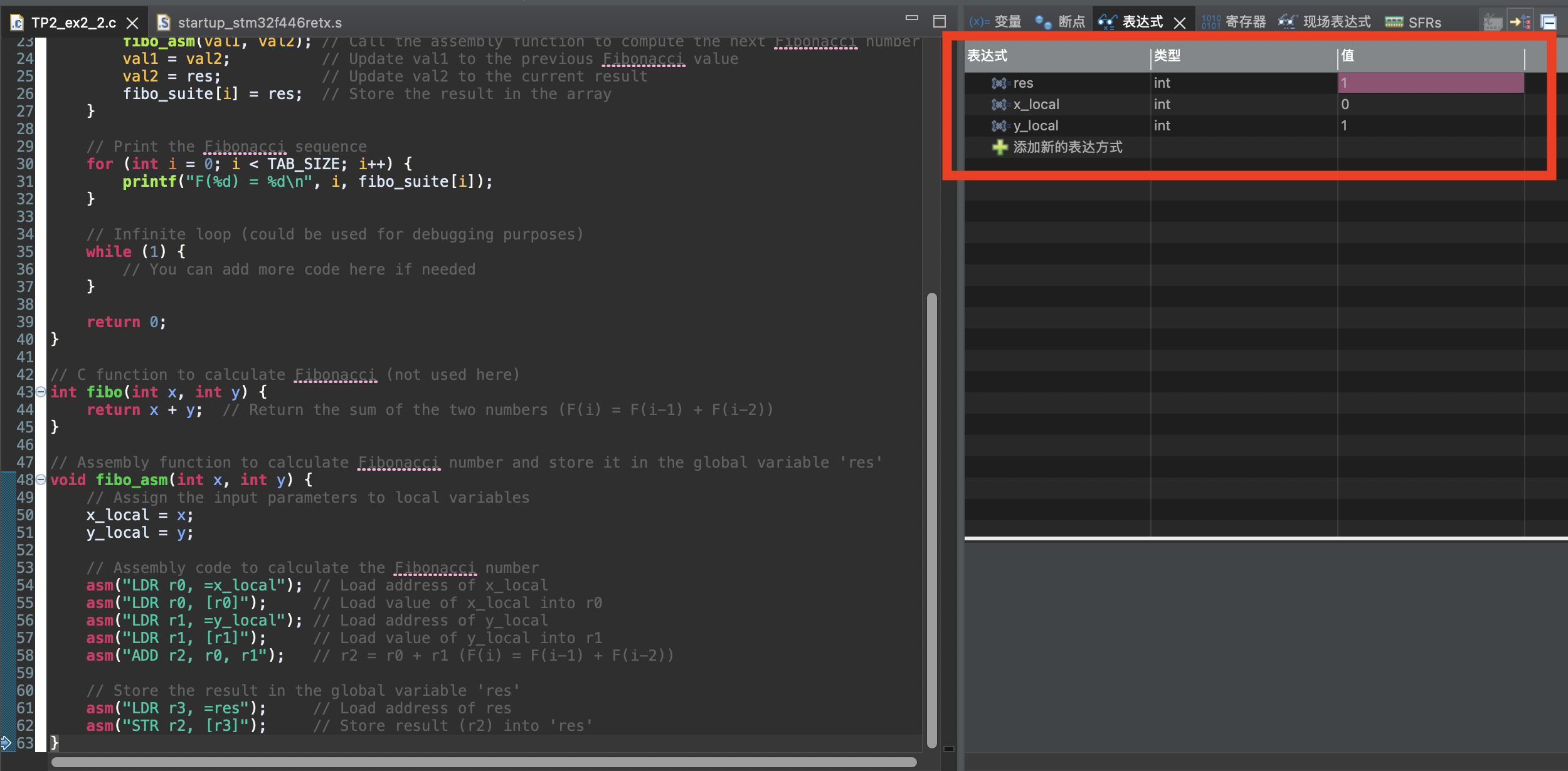
- x=0 y=1 res=1
- x=1 y=1 res=2
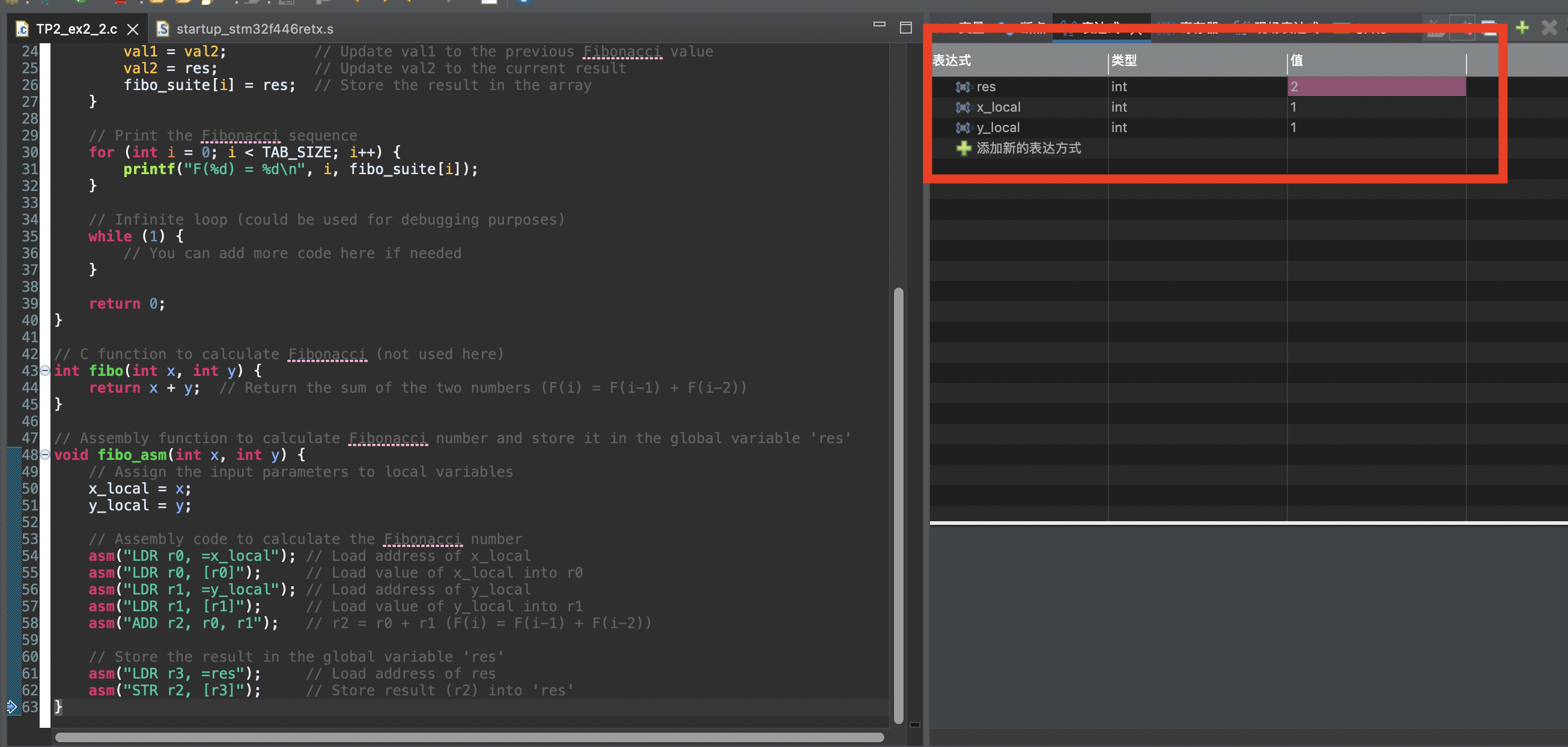
- x=1 y=2 res=3
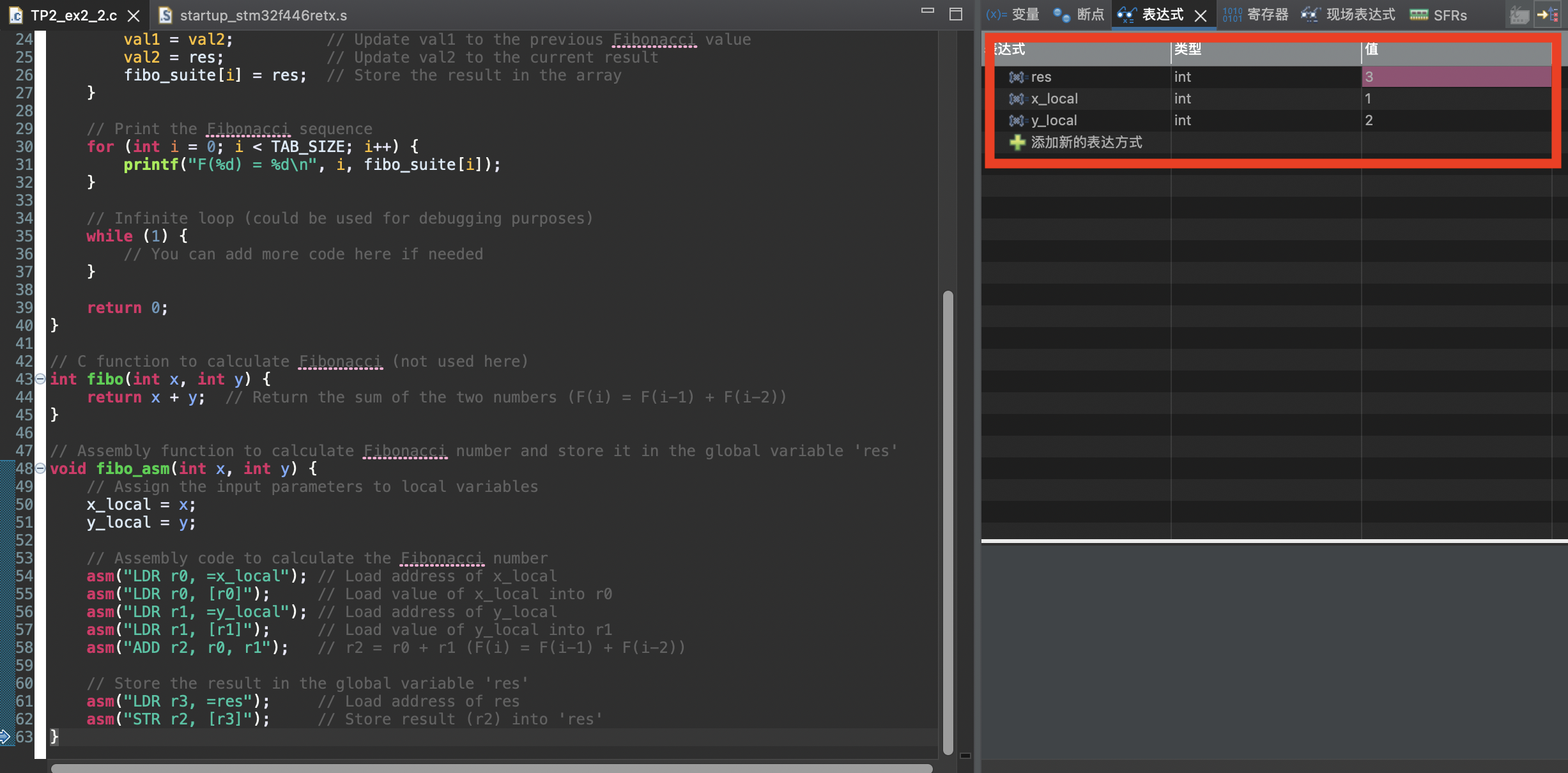
après c’est kif-kif
……
- x=13 y=21 res=34
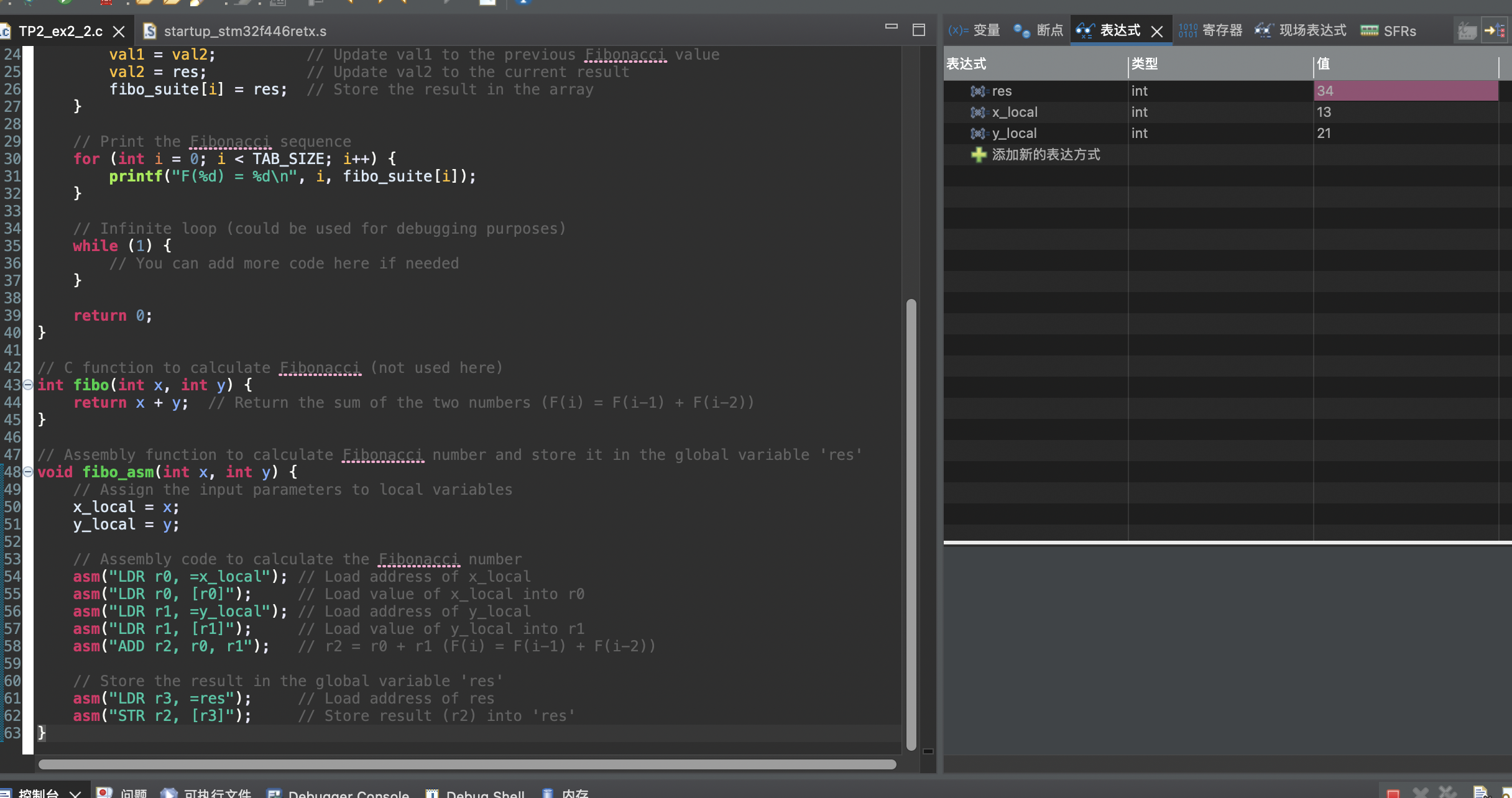
Ex3
C:
1 | int count_e(char* tab){ |
resultat: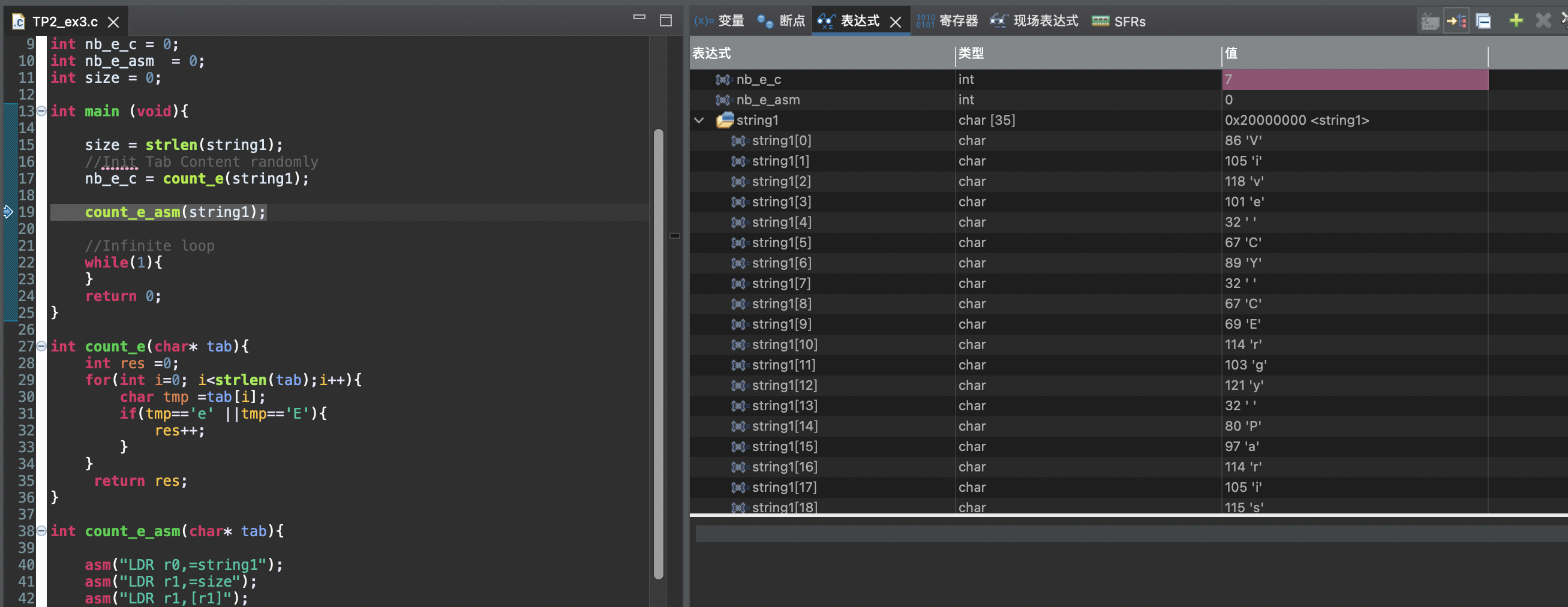
asm
1 | int count_e_asm(char* tab){ |
resultat: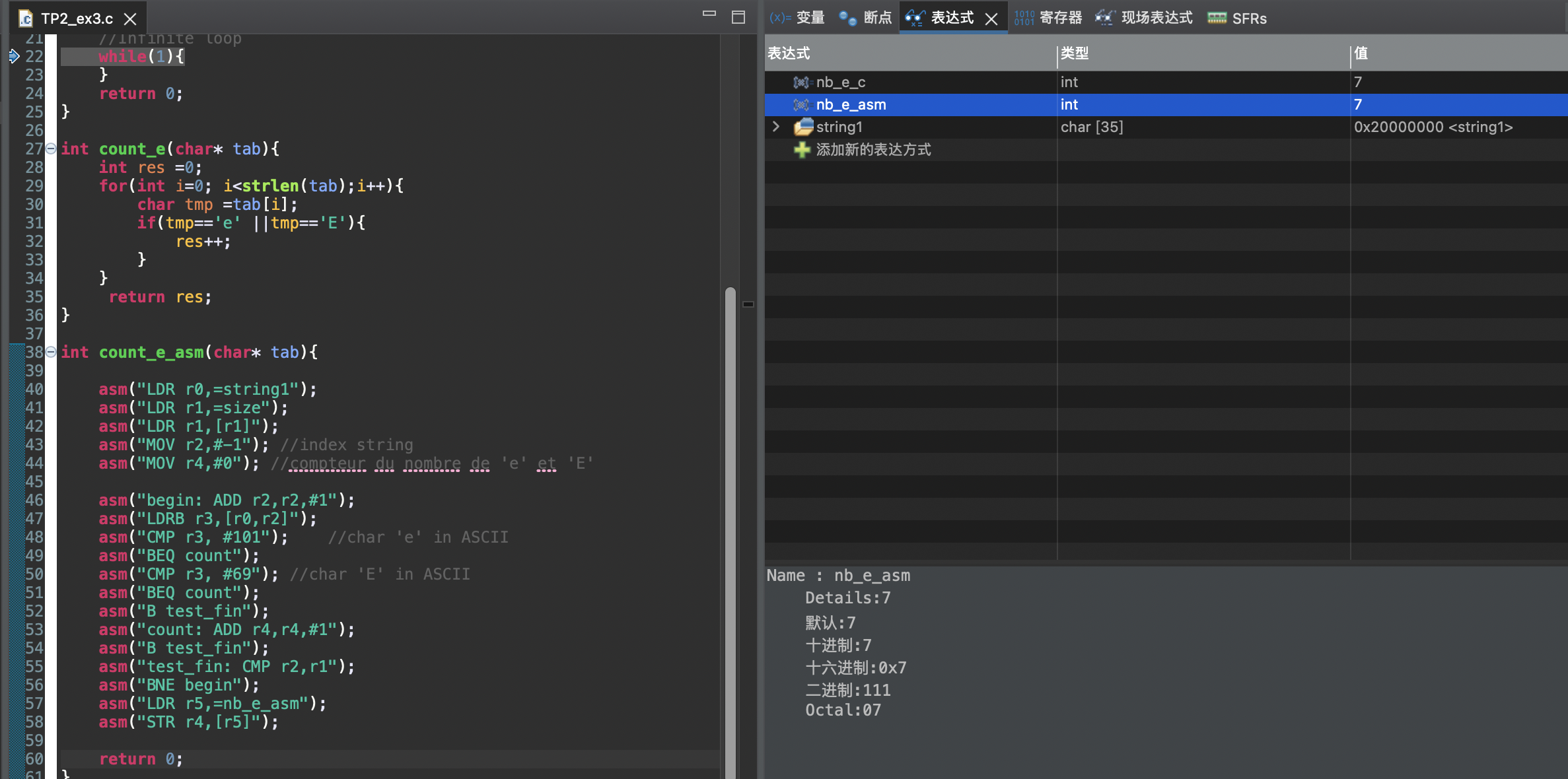
本博客所有文章除特别声明外,均采用 CC BY-NC-SA 4.0 许可协议。转载请注明来源 Elie Blog!
 Wechat
 Alipay
相关推荐

2025-02-15
Micro_TP1
Rapport de Micro TP1JIN Zhuoyuan 22213816Exercice1ex1.Que contient le fichier startup_stm32f446retx.s ? Que permet-il selon vous ?Contenu :Le fichier startup_stm32f446retx.s est un fichier d’assemblage. Il contient principalement le code de démarrage pour le microcontrôleur STM32F446RETx. Il inclut la définition de la table des vecteurs d’interruption, l’initialisation de la pile, l’initialisation des segments de données (.data et .bss), l’appel à la fonction SystemInit pour configurer...

2025-03-01
Carre et Bipartition de Graphe
图的平方(G²)定义对于一个图 G = (V, E),它的平方图 G² 是一个具有相同顶点集 V 的新图,其中: 如果 u 和 v 在原图 G 中的最短路径距离 d_G(u, v) ≤ 2,则在 G² 中添加一条边 (u, v)。 换句话说,在平方图中,原图中相邻的顶点仍然相邻,且所有原图中距离为 2 的顶点在平方图中会直接相连。 数学表示设原图 G 的邻接矩阵为 A,则平方图 G² 的邻接矩阵 A² 可以通过矩阵乘法计算:A² = A + A²其中: A 是原图的邻接矩阵,A² 计算了两步可达的顶点对。 A² 的非零元素表示原图中两步可达的顶点,它们会在平方图中直接相连。 下面分别对MatAdj和ListeAdj两种图的结构实现图的平方: MatAdj123456789101112131415161718MatAdj carre_MA(MatAdj g) { int n = g.nbSom; MatAdj g2 = allocMatAdj(n); for (int s = 0; s < n; s++) { ...
2025-03-02
Connexe de Matrices
Composants Connexes找连通分量(通过深度、广度搜索) 伪代码123456789101112131415161718192021222324252627//找连通分量procédure ComposantesConnexes(Graphe g)Début //Initialisation n ← nbSom(g) visite ← allocTab(n) pour chaque sommet s variant de 1 à n faire visite[s] ← faux finPour s ← 1 nbSomVisite ← 0 finParcours ← faux //Traitement Tantque non finParcours faire reParcoursProfondeur(s, visite, g, nbSomVisite, ....) //A modifier // itParcoursProfondeur(s, visite, g,...
2025-03-02
Fermeture Transitive
Fermeture Transitive d’un Graphe (传递闭包)图的传递闭包(Transitive Closure) 主要用于描述图中**可达性(reachability)**的关系。 给定一个有向图 G = (V, E) ,其传递闭包 G* 是一个新的图,其中:若 从顶点 u 可以通过某条路径到达 v,那么在 G* 中, (u, v) 之间直接有一条边。即:若 u 能通过 1 条或多条边到达 v ,则在传递闭包中直接连接 u 和 v。 Warshall算法Warshall 算法简介算法概述Warshall 算法用于计算有向图的传递闭包,即判断图中哪些顶点是可达的。它是 Floyd-Warshall 算法 的一种特例,专门用于可达性问题。 算法思想对于一个有向图的 邻接矩阵 A,如果存在路径 从顶点 i 到 j,则在 传递闭包矩阵 T 中,T[i][j] 置为 1。算法通过动态规划逐步更新可达性信息。 算法步骤 初始化:将原始邻接矩阵 A 作为可达性矩阵 T。 逐步加入中间点 k: 如果从 i 到 k 可达,且从 k 到 j 可达,那么...
2025-02-22
Graphe_Matrices
Matrice d‘incidence(关联矩阵)Matrice d’incidence sommets-Arcs(有向图)定义(顶点-弧的关联矩阵)在图论中,关联矩阵(Matrice d’incidence) 是一种描述图中顶点与边(或弧)之间关系的矩阵。定义: 顶点-弧关联矩阵是一个矩阵,用于表示图中每个顶点与每个弧之间的关系。对于一个有向图或无向图的每个弧,矩阵中包含表示该弧和顶点之间的关联信息。 假设图有 n 个顶点和 m 条弧(边),则顶点-弧关联矩阵是一个 n \times m 的矩阵,其中: 每一行代表一个顶点(1,2,3,4) 每一列代表一个弧(或边)(a1,a2,a3…) 结构:123456typedef struct { int nbSom; //顶点数量(矩阵行数) int nbAcs; //弧数量(矩阵列数) int **mat; //二维数组用于存矩阵数据(-1,,0,1) //TCout **cout; //二维数组用于储存权重数据}MatIncidente; Matrice...
2025-03-01
Parcours de Graphe
ParcoursProfondeur对三种数据结构(MatAdj,ListeAdj,FS)的图进行递归和迭代两种方法的深度优先遍历(DFS)。 12345678910111213141516171819202122#include <stdio.h>#include <stdlib.h>#include "../structGraphe.h"//根据visite数组,返回下一个sommetint somSuivant(int s, int n, int *visite) { for (int i = s + 1; i < n; i++) { // 从 s+1 开始找 if (!visite[i]) { // 发现未访问的节点 return i; } } // 如果没有找到,则从头开始找 for (int i = 0; i < s; i++) { ...
评论